The Colonial Exhibitions of 1906 and 1922. Between fascination and resistance







Historical context
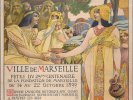
In 1903, the doctor Édouard Heckel and businessman Jules Charles-Rous were tasked with organizing the first colonial exhibition in Marseille. This exhibition had multiple aims. Firstly, to legitimize the recent French colonial conquest from which certain, such as Tunis, Dahomey, and Madagascar, were heavily supported by local elites. Then, it aimed to demonstrate the benefit of the colonial markets to Marseille’s economy. Finally, it had the objective of exhibiting colonized populations with, of course, all the stereotypes of the time.


The project was developed meticulously in direct partnership with the colonial administration (colonial administrators and the representative of the indigenous populations). The first French colonial exhibition was inaugurated the 15 april 1906 in Marseille.
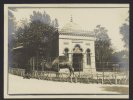
For seven months the cité phocéenne became an area of commercial exchange between the colonies and companies from Marseille to Lyon. This event unfolded in a spectacular decoration. Every pavilion represented a singular or collection of conquered territories, using architectural styles that were largely invented or built on the fantasy of that territory. Throughout the entirety of the exhibition scientific conferences dedicated to the colonies were organized. The Colonial Exhibition consisted both of educating but also providing entertainment. The festival rides, camel rides, hot air balloons, performances, and festivities all found great success.

1,800,000 visitors went to the exhibition. The popularity of the event encouraged the Chamber of commerce of Marseille and the l’Institut colonial to renew the experience every 10 years. A new exhibition was therefore scheduled for 1916 in what, in the meantime, would become Parc Chanot. However, its organization is delayed because of the world conflict.
Thus, following the First World War, Marseille’s economic circles sought to boldly reaffirm the colonial vocation of the port of Marseille. They returned to the exhibition project initially intended for 1916 and confided its execution to one of their own, Adrien Artaud. He was the deputy of the Bouches-du-Phône, the former president of the Société pour la défense du commerce et de l’industrie de Marseille (1902-1904) (Society for the defense of commerce and industry in Marseille), the sitting president of the Chamber of Commerce since 1913, and very involved in colonial exchanges with his wine trading company and his participation in multiple administrative councils for various trade houses. Adrien Artaud surpassed the expectations of the promoters of the operation : more than 3 million visitors went to the Colonial Exhibition of 1922 to discover the reconstitutions that were supposed to evoke each French colony.
However, the atmosphere was not the same as it was in 1906. The involvement of colonised populations on various fronts of World War I and the economic crisis that plagued the colonies during and following the war, shook up convictions and revived protests. Even on the side of the colonizers, doubt appeared. Following the Colonial Exhibition of 1922, Adrien Artaud organized a large conference on the perspectives of the colonial economic policies of France and declared : “It is necessary to know how to pardon ourselves for the acquisition of a magnificent colonial estate, and to be pardoned by the colonies for having conquered them. Because it was not they that asked us to conquer them, the only way to legitimize our intervention is to ensure them more prosperity than they would have had should we not have gone to them”. In favour of the numerous investments planned by the Sarraut bill, still under discussion within the Colonial Commission of Parliament, he adds: “Colonization pays and we therefore, have the greatest interest in doing for the colonies what should be done”.
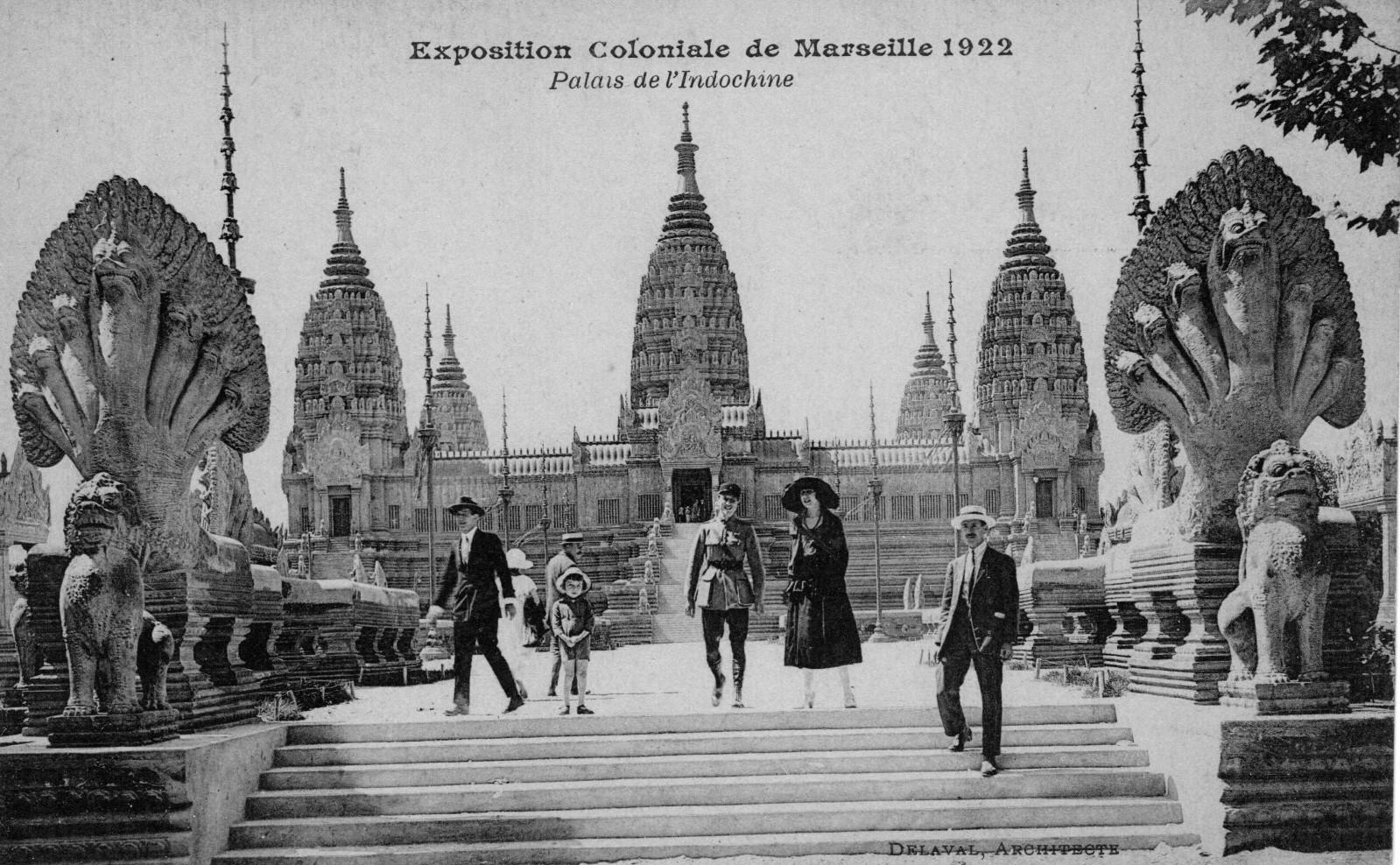
Paris, jealous of the success of the unprecedented architectural staging, then competed with Marseille for the organization of these exhibitions until the period of decolonization. Paris organized the exhibition of 1931.
Critical approach : Marseille’s political oppositions to the colonial exhibition of Paris (1931)
It would be quite ambitious to create a political assessment of oppositions to the colonial exhibition in Paris in 1931. The issue is linked to that of the broader political function that this opposition campaign held in the anti-imperialist circles. We can, however, retain that the circles that were mobilized around this opposition – French communists, Indochineses living in metropolitan France – also reacted from Marseille, the town of the first two colonial exhibitions.
Often, within classic historiography and the collective memory, the counter colonial exhibition of 1931 is seen as the founding moment of the anticolonialism movement in France. The counter-exhibition, organized by the surrealists, the Confédération générale du travail unitaire (CGTU) (general confederation of unitary labor) and the Communist party, was the response to the exhibition in Paris in 1931.
Multiple cities in metropolitan France formed anti-imperialist committees, in particular Paris, Bordeaux, and Marseille. The committee of Marseille was composed of around 10 members. They met regularly at the Club international des marins (international sailors’ club), a network of cafés that were under the auspices of the International of Sailors and Dockers, created in October 1930 by the maritime section of the Profintern. Since the end of March 1931, the committee had begun a variety of actions. One of its missions was to dishonor the employees of the colonial exhibition recruited from Indochina, and debarking in Marseille. On April 12th at 5:30am, as the Cap Tourane arrived, transporting a contingent of employees, about 50 indochinese protestors, including students and navigators, welcomed them equipped with whistles. The future employees of the colonial exhibition were forced to spend an extra night aboard their boat, docked at a dock that was monitored by a large police presence. This protest had been announced by handouts in quốc ngữ that had been distributed on the port the days prior to the action. On April 10th 1931 a handout announced the creation of a committee to fight against the exhibition and encouraged striking during the exhibition. However, the planning of this protest had its root planted before the formalization of the committee of action against the exhibition. In a letter from Fouque, the representative of CAI of Marseille, to Gaston Joseph, director of Affaires politiques du ministère des Colonies (political affairs of the ministry of the colonies) dated from the 13th of February, he had indicated that the Indochinese in Marseille planned to purchase about “fifty whistles to jeer at, upon their arrival to the docks, the Annamese delegates coming to France to represent Indochina at the colonial exhibition”. A similar protest was planned against the landing of the Azay-le-Rideau on the 28th of April and the Artagnan on the 1st of May. The Old Port was being closely surveyed by the police allowing these boats to dock despite the presence of about a hundred indochinese protestors.
The exhibition in Paris in 1931 resurfaced the colonial question within the communist agenda. But Marseillais activists had already laid the foundations of an anti-imperialist discourse pointing to the relative autonomy in their actions within the context of the normalization imposed by the Comintern. These relatively autonomous activist collectives of the Communist party, created a campaign that is not necessarily a direct result from Moscow. State surveillance, repression, existing revolutionary practices, are all elements that explain the form and actions taken through this campaign.
The main limiting factor of the opposition to the exhibition largely depassed the activists. Despite the political reinvestment of the strikes on the worksite, despite permanent agitation maintained on the Vincennes site, the activists could not rely on the semi-inexistant social movement in opposition of the expositions. Alone they were unable to assume the generalized force, despite the authorities’ concerns. If certain activists criticized the energy spent on this action as another political failure, this campaign will have nevertheless played a role in reconnecting the anti-imperialist network of France, even while in Germany this circle is crumbling in the face of the rising reaction.
Authors
-

BOLLENOT Vincent
Historien, HisTéMé. -

CHABANI Samia
Coordinatrice générale d’Ancrages, journaliste Diasporik
Bibliography
Georges Aillaud, Isabelle Aillaud, Bernard Barbier et al., Désirs d’ailleurs, les expositions coloniales de Marseille 1906 et 1922, Marseille, Alors Hors du Temps, 2006, 139 pages
Archives départementales des Bouches-du-Rhône, L’exposition coloniale de Marseille de 1922, exposition virtuelle, en ligne
Pascal Blanchard et Gilles Boëtsch (dir.), Marseille, porte Sud. Un siècle d’histoire coloniale et d’immigration, Paris, La Découverte, 2005, 240 pages
Vincent Bollenot, « “Ne visitez pas l’exposition coloniale !” La campagne contre l’exposition coloniale internationale de 1931, un moment anti-impérialiste », French Colonial History, 2019, 18, pp. 69-100
Aurélia Dusserre, « L’escalier de la gare Saint-Charles, ou Marseille “porte de l’Orient” », in Pierre Singaravélou (dir.), Colonisations. Notre histoire, Paris, Seuil, 2023, pp. 473-474
Johanna Kilger, Le Pavillon de la Chambre de commerce de Marseille et des intérêts français dans le Levant à l’Exposition coloniale de Marseille de 1922, mémoire inédit de Master II Histoire et Humanités (spécialité Recherche), Aix-Marseille Université, 2015
Sandrine Lemaire, Pascal Blanchard, Nicolas Bancel et al., Colonisation & Propagande. Le pouvoir de l’image, Paris, Le Cherche midi, 2022, 296 pages
Catherine Marand-Fouquet, « Le genre des colonies. Sur les escaliers de la gare Saint-Charles », Clio. Histoire, femmes et sociétés, 12, 2000, pp. 188-191
Gérard Monnier, « Deux chantiers de sculpture monumentale à Marseille en 1925 : l’escalier de la gare Saint-Charles, le Palais de l’automobile », Marseille, 136, 2e trimestre 1984, pp. 22-31
Nadia Vargaftig, Des empires en carton. Les expositions coloniales au Portugal et en Italie (1918-1940), Madrid, Casa de Velázquez, 2016, 344 pages
How to cite
(2026). “The Colonial Exhibitions of 1906 and 1922. Between fascination and resistance”, Mars Imperium (https://marsimperium.org/les-expositions-coloniales-de-1906-et-de-1922-entre-fas), page consultée le 28 October 2026, RIS, BibTeX.