Marseille, port colonial







Contexte historique
Un temps affaibli par les guerres révolutionnaires et impériales, le commerce maritime de la cité phocéenne se rétablit progressivement dès les années 1820, dans la droite ligne de ses orientations traditionnelles. Ainsi, à l’image des frères Pastré qui prennent pied à Alexandrie (1825), les négociants marseillais nouent d’étroites relations avec le Khédive Mehmet-Ali et fondent des établissements prospères au Moyen-Orient.
Ils encouragent également l’établissement de relations économiques avec l’Afrique du Nord, soutiennent la conquête de l’Algérie et participent à son exploitation, notamment par l’acquisition de vastes domaines agricoles dans la Mitidja. En 1840, les trois quarts des exportations françaises vers l’Algérie transitent ainsi par Marseille. Enfin, ils espèrent un essor de leurs activités commerciales vers les Indes et la Chine après le percement du canal de Suez, achevé en 1869.
Hors de l’aire méditerranéenne, les marchands marseillais sont présents dans l’Océan Indien. Au Mozambique, les Fabre fondent des factoreries. Dans le sultanat de Zanzibar, Alfred Rabaud installe des comptoirs commerciaux. À Madagascar, la maison Roux de Fraissinet prend une place majeure dans l’économie de l’île. En Afrique de l’Ouest, des comptoirs sont créés entre le Sénégal et l’Angola par Victor Régis qui favorise le commerce de l’huile de palme puis de l’arachide pour les besoins des huileries, savonneries et stéarineries de Marseille. Les négociants financent également des missions d’exploration. Ainsi, l’industriel Charles-Auguste Verminck confie à deux de ses agents le soin de découvrir les sources du Niger à partir de la Sierra Leone. Il crée ensuite la Compagnie du Sénégal et de la côte occidentale d’Afrique, qui devient la Compagnie française d’Afrique occidentale en 1887.
Toutefois, parce qu’il leur faut affronter la concurrence des commerçants européens, les négociants marseillais adoptent, à la fin du XIXe siècle, une nouvelle attitude. Alors qu’ils avaient toujours voulu développer leurs affaires de manière indépendante, ils réclament désormais la protection de l’État et la défense de leurs intérêts. De ce fait, ils soutiennent à présent l’entreprise coloniale. C’est à la Chambre de commerce qu’ils élaborent leur stratégie et c’est grâce à elle qu’ils diffusent leurs arguments auprès des politiques. Par l’intermédiaire de Cyprien Fabre, des frères Mante, de Georges Borelli ou de Jules-Charles Roux, ils militent pour une intervention militaire afin de préserver la présence française des ambitions allemandes et anglaises. De la sorte, ils obtiennent en 1894 la conquête définitive du Dahomey.
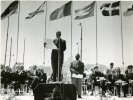
Ces milieux d’affaires sont alors très étroitement liés à la Société de géographie de Marseille. Fondée en 1877 par Alfred Rabaud, celle-ci souhaite promouvoir l’enseignement de la géographie et relayer auprès de l’opinion les résultats des missions d’exploration. Dans cette perspective, les fondateurs de la Société publient un bulletin trimestriel, organisent des cours publics gratuits et des conférences sur les régions « découvertes ». À leur initiative également, des manifestations sont organisées pour accueillir les explorateurs qui regagnent la France par le port de Marseille.
Recrutés parmi l’élite scientifique, économique et commerciale de la ville, les membres de la Société ont des ambitions communes. Dans leur optique, les missions d’exploration sont un préalable nécessaire au développement du commerce marseillais. Or, dans un contexte de rivalités économiques et de tensions diplomatiques avec les puissances européennes, la France ne doit pas hésiter à conduire des expéditions militaires pour sauvegarder ses aires d’influence. C’est ainsi qu’ils appréhendent le phénomène colonial.
Approche critique
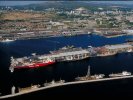
En l’espace de deux cents ans, le port de Marseille a connu une série de mutations radicales et relativement rapides de ses infrastructures, de ses fonctions économiques et de ses modes d’administration. Elles ont accompagné l’accélération de la mondialisation des échanges ainsi que les évolutions de la politique maritime nationale. De l’anse du Lacydon – l’actuel Vieux-Port – jusqu’aux extensions situées en dehors de la ville à Lavéra et à Fos-sur-Mer, en passant par les installations intramuros alignées entre la Joliette et l’Estaque ; des arrivages de matières premières agricoles et minérales coloniales aux touchées des supertankers chargés de pétrole brut ; des palanquées de marchandises manutentionnées à la force des bras aux terminaux de conteneurs hyper-mécanisés ; des prérogatives des milieux d’affaires locaux, regroupés au sein de la Chambre de commerce, au rôle grandissant de l’État dans l’aménagement et la gestion des quais, chaque transformation a façonné des paysages portuaires singuliers, avec leur lot de techniques, de pratiques, de stratégies et de négociations entre des acteurs originaux.
La fonction industrielle du port de Marseille n’est pas née à la fin du XIXe siècle à partir des arrivages de sucres et d’oléagineux. Celle-ci est bien antérieure aux années 1870 et repose sur d’autres produits. Le travail du coton (indiennage, toiles piquées, cotonnines), la confection de draps et de bonnets en laine et la production de soieries, qui sont particulièrement dynamiques dans les années 1690, alimentent des négoces industrialisants de matières premières textiles et tinctoriales, puis génèrent des exportations maritimes de produits finis. Tant pour les approvisionnements que pour les débouchés, les « quatre parties du monde » sont connectées à la cité phocéenne, preuve que Marseille est déjà un port mondial à l’orée du XVIIIe siècle.
Loin d’être recroquevillée sur la Méditerranée, Marseille s’ouvre de plus en plus au commerce atlantique – en particulier aux Antilles françaises – à partir des années 1720. Cette ouverture océane lui assure une forte croissance économique, contrairement à l’image d’un port dépendant du négoce levantin à laquelle il est régulièrement associé – y compris dans l’historiographie. Ce cadre méditerranéen apparaît néanmoins comme un refuge en cas de crise et comme un soubassement indispensable à la conquête de nouveaux horizons océaniques, qui sont déjà ceux des futures colonies.
Les représentations associées au « premier port de France » ont aussi profondément changé, tant sous l’effet des imaginaires qui imprègnent le monde maritime, qu’en raison des idées reçues médiatisées par la presse auprès d’un large public.
La « place florissante » du XIXe siècle, alimentée par les trafics ultramarins et dynamisée par une industrie de transformation en plein essor, a cédé le pas à l’image négative d’un port en crise, qui a subi de plein fouet les conséquences de la décolonisation et de la désindustrialisation dans la seconde moitié du XXe siècle et qui serait incapable de s’adapter à une nouvelle conjoncture internationale hautement concurrentielle.
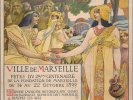
Parmi les poncifs vecteurs d’imaginaires à l’égard de la place marseillaise, le topos du « port colonial » est aussi célèbre que celui de la « Porte de l’Orient », immortalisé par le célèbre tableau de Puvis de Chavannes.
Au-delà des mots et des images, la perception des réalités économiques a longtemps été biaisée par le paradigme nationaliste de l’exclusif colonial, qui a conduit à examiner les relations maritimes entre la cité phocéenne et l’empire français sans intégrer la part des colonies étrangères. Les avancées de l’historiographie impériale vont à l’encontre de cette tradition.
Si certaines filières industrielles ont été étroitement connectées avec des marchés ultramarins – notamment pour l’importation de matières premières vouées à être transformées – et si l’ouverture du canal de Suez a permis à Marseille de construire un système économique impérial où s’enchevêtrent interactions et interdépendances entre des colonies qui n’entretenaient pas, jusque-là, de relations suivies, les échanges coloniaux ont rarement représenté plus de 25 % de l’ensemble du trafic portuaire entre 1913 et les Indépendances. Au cours de ces années, Marseille est resté avant tout un port mondial très diversifié, ouvert à tous les marchés. En revanche après les indépendances, on a une intensification des échanges entre Marseille et les ex colonies françaises, notamment en Afrique.
Auteurs et autrices
-
BARTOLOTTI Fabien
Historien, TELEMMe -
CHABANI Samia
Coordinatrice générale d’Ancrages, journaliste Diasporik
Bibliographie
Fabien Bartolotti, « Le béton à la mer. La construction d’ouvrages de protection portuaire en blocs artificiels dans l’espace méditerranéen (années 1830-1870) », Revue d’histoire maritime, n° 27, 2020, p. 103-118.
Jean-Lucien Bonillo (dir.), Marseille, ville & port, Marseille, Parenthèses, 1992, 224 pages
René Borruey, « Les logiques de l’espace portuaire moderne à Marseille, 1850-2020 », dans Fabien Bartolotti, Xavier Daumalin, Olivier Raveux (dir.), L’Histoire portuaire marseillaise en chantier. Espaces, fonctions et représentations, XVIIe-XXIe siècle, Aix-en-Provence, Presses universitaires de Provence, 2021, p. 61-79
René Borruey, Le port moderne de Marseille : du dock au conteneur (1844- 1974), Marseille, CCIMP, 1994, 444 pages
René Borruey, « Le silo d’Arenc : épave ou monument », L’Archéologie industrielle en France, n° 28, juin 1996, p. 40-49
Pour citer
(2026). “Marseille, port colonial”, Mars Imperium (https://marsimperium.org/marseille-port-colonial), page consultée le 13 septembre 2026, RIS, BibTeX.